In 2003, the Mississippi Industrial Heritage Museum obtained the lease to the complex and has operated there since. The city holds an annual Soulé Live Steam Festival at the complex attracting thousands of people from around the nation.

"How old would ya be, if ya didn't know how old you was?" - Satchel Paige. My purpose in creating this blog, Meridiana, is to identify and capture an essence of those people, places and things that have contributed and, in some cases, continue to contribute meaning, texture and enrichment to the lives of those of us who grew up in Meridian, Mississippi during the ‘50s 'n' ‘60s. And, maybe i'll add a few surprises, too.


Chuck Berry provided his teenage fans with an outlet to express the feelings and desires that 1950's society taught them they were not supposed to have.| History courtesy of Charles (Buddy) Broome: John Harvey, Fred Ross and I signed Chuck at Fred Ross's mobile home on Hwy 80 in Jackson. Chuck was very polite and looking sharp in his silk suit and bebop cap. He drank a beer with us and didn't seem at all troubled about doing business with juveniles. (I believe John was 18, Fred was 17, and I was 16.) My last image of Chuck was someone leading him out a side door at the Key Field Officer's Club to hide him after the problem arose. Ross had proudly assumed the mantle of Chuck's roadie; drove him to the Country Club for intermission, and when they of course told him that people of the Negro race were not admitted socially, cut a deal for Chuck to pay his way by performing a couple of songs there. Then, during a break in the latter stages of the dance, he responded to Chuck's request for a little female company by recruiting the girl to visit the break room. What happened there we may well imagine, but she left distraught, and probably told her friends straightaway. Police officers escorted Berry out of the parking lot and straight to the jailhouse where they fined him for disturbing the peace. A couple of days later, a police car took the Prince and I to the County Attorney's office for depositions. We of course knew nothing. |

| Originally founded as the Jackson Paper Company was founded in 1921 by Mr. Harvey Newell. Newell's employees started off selling industrial paper products like paper towels, toilet paper and cups, later adding fine printing paper and janitorial supplies and equipment to the list of products. Today, the company sells more than 7,000 different products to its customers under three primary product lines: fine printing papers, industrial grade papers and janitorial supplies and equipment. In 1946, the company expanded its operation by opening the Newell Paper Company in Meridian. Today the company, which is owned entirely by its employees as a privately held corporation, covers a market area which includes over 8,000 customers in Mississippi, Louisiana and Alabama and has 185 employees Current location is: 1212 Grand Avenue, Meridian 39301 |


| Hartley often doodled iterations of his now-famous logo during high school. It's difficult for me to think of Meridian today without thinking of Peavey Electronics. ![]() |
“My mother, Southern to the bone, once told me, "All Southern literature can be summed up in these words: 'On the night the hogs ate Willie, Mama died when she heard what Daddy did to sister” |

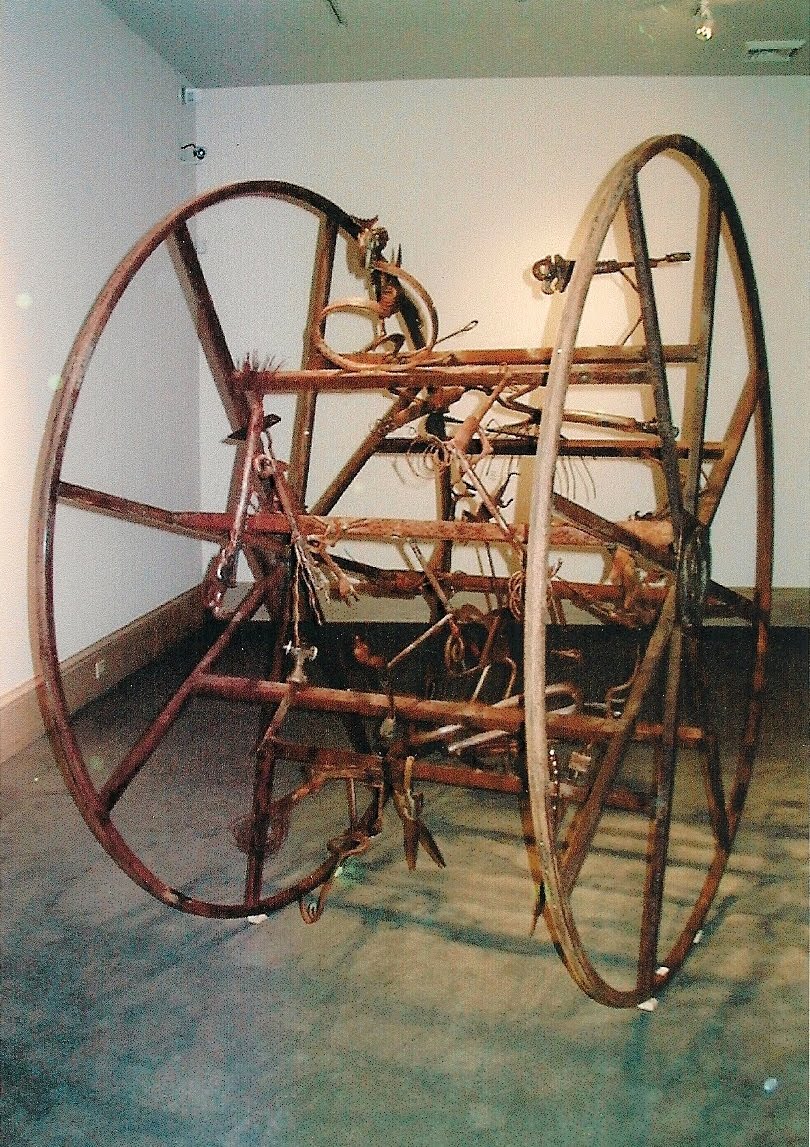
Lilith is a large sculpture: 7' x 5' x 7', and is composed of found objects from the junk yard and cast bronze and cast iron.


Roytex, Inc., a private company, was founded in 1955 and is still around today with offices and about 50 employees in New York City. Like so many other textile-related industries, they outsource the work to overseas operations. From what I can find out, the products from the Tuxedo plant are now being made by a contract manufacturer in Bangladesh.Roytex Inc 901 D St Meridian, MS 39301 |

Brad Watson was born and grew up in Meridian, Miss. He became interested in theater in high school, and, after graduation, went to California to look for work in Hollywood as a set-builder. Unable to find a movie job due to a strike, Watson worked as a garbage collector. After about a year, he returned to Meridian and worked in a variety of jobs, including carpentry and bartending. He also attended Meridian Junior College, where he became interested in writing. Watson earned a BA in English at Mississippi State University in Starkville in 1978. He then enrolled at the University of Alabama, earning an MFA in creative writing and American literature in 1985. In the mid-1980s, Watson also worked for a weekly newspaper on the Gulf Coast. He later wrote for the Montgomery Advertiser and for an advertising agency in Montgomery.
From 1988 to 1997, Watson was employed by the University of Alabama as an instructor and as a writer in the public relations office. During this time, he was also writing short stories. Several were published in literary journals such as The Greensboro Review and Story. A collection, Last Days of the Dog-Men, was published in 1996. The following year, Watson moved to Massachusetts where he held a five-year appointment as a Briggs-Copeland Lecturer at Harvard University. He published a novel, The Heaven of Mercury, in 2002. Watson then moved to Pensacola, where he was writer-in-residence for a year at the University of West Florida. He spent a semester teaching at the University of Alabama at Birmingham before being appointed the John and Renee Grisham Writer in Residence at the University of Mississippi in Oxford. In 2005, Watson became a member of the English faculty of the University of Wyoming and moved to Laramie.
Brad Watson’s fiction is set in the South and frequently involves failed interpersonal relationships. Last Days of the Dog-Men is a collection of short stories about dogs and people. The Heaven of Mercury is set in a fictional town that is based partly on his hometown of Meridian, Miss., and partly on Alabama Gulf Coast towns like Foley and Gulf Shores.

Brad Watson was born and grew up in Meridian, Miss. He became interested in theater in high school, and, after graduation, went to California to look for work in Hollywood as a set-builder. Unable to find a movie job due to a strike, Watson worked as a garbage collector. After about a year, he returned to Meridian and worked in a variety of jobs, including carpentry and bartending. He also attended Meridian Junior College, where he became interested in writing. Watson earned a BA in English at Mississippi State University in Starkville in 1978. He then enrolled at the University of Alabama, earning an MFA in creative writing and American literature in 1985. In the mid-1980s, Watson also worked for a weekly newspaper on the Gulf Coast. He later wrote for the Montgomery Advertiser and for an advertising agency in Montgomery.
From 1988 to 1997, Watson was employed by the University of Alabama as an instructor and as a writer in the public relations office. During this time, he was also writing short stories. Several were published in literary journals such as The Greensboro Review and Story. A collection, Last Days of the Dog-Men, was published in 1996. The following year, Watson moved to Massachusetts where he held a five-year appointment as a Briggs-Copeland Lecturer at Harvard University. He published a novel, The Heaven of Mercury, in 2002. Watson then moved to Pensacola, where he was writer-in-residence for a year at the University of West Florida. He spent a semester teaching at the University of Alabama at Birmingham before being appointed the John and Renee Grisham Writer in Residence at the University of Mississippi in Oxford. In 2005, Watson became a member of the English faculty of the University of Wyoming and moved to Laramie.
Brad Watson’s fiction is set in the South and frequently involves failed interpersonal relationships. Last Days of the Dog-Men is a collection of short stories about dogs and people. The Heaven of Mercury is set in a fictional town that is based partly on his hometown of Meridian, Miss., and partly on Alabama Gulf Coast towns like Foley and Gulf Shores.
Favorite Quotations:
"They sicken of the calm, who knew the storm." - Dorothy Parker
"Those who wander are not necessarily lost." - J.R.R. Tolkien
"You can safely assume that you’ve created God in your own image when it turns out that God hates all the same people you do." - Anne Lamott
"A maid laughing is half taken." - anonymous Elizabethan poet
"Outside of a dog, a book is a man's best friend. Inside of a dog, it's too dark to read." - Groucho Marx
*You don't really understand human nature unless you know why a child on a merry-go-round will wave at his parents every time around and why his parents will always wave back." - William D. Tammeus